
If you’re a dancer new to improvisation (or need a refresher), here are some improvisation basics:
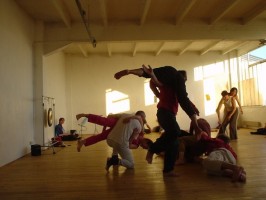
- Improvisation involves creating and executing movement spontaneously, without any premeditated choreographing.
- Improvisation isn’t limited to modern or postmodern dance.
- Improvisation may or may not include contact improvisation (involving the physical connection and sharing of weight with another person or people).
- Improvisation can be practiced, performed, or used to make choreography.
- Improvisation is a movement skill as well as a dance form that takes practice to master just like any other.
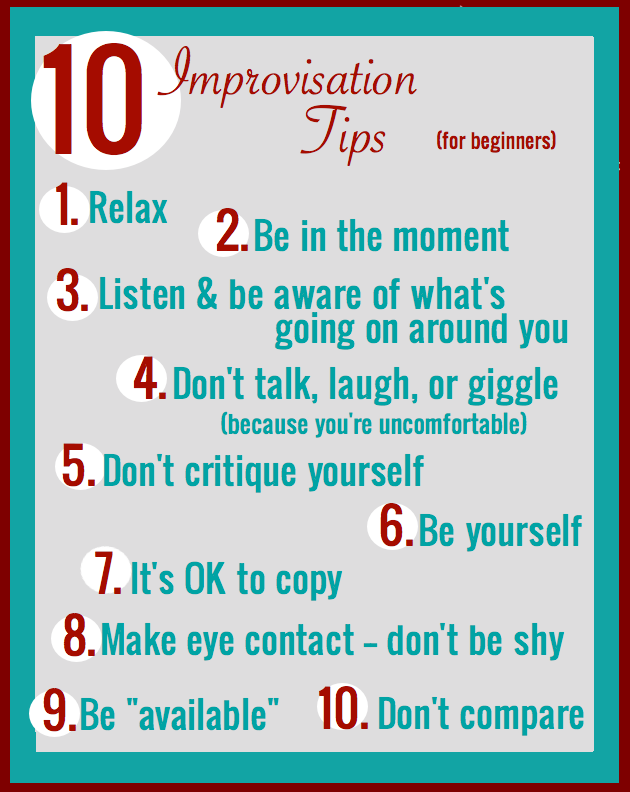
1. Relax. Need I say more?
2. Be in the moment. Don’t try to think ahead too much or plan. If something unexpected happens, accept it, go with it, explore it, see where it takes you.
3. Listen and be aware of what’s going on around you, BUT allow yourself to enjoy moving the way your body wants to move.
4. Don’t talk, laugh, or giggle. If you are a beginner or feeling uncomfortable with being asked to move ‘on the spot’ it is natural to want to release any tension with talking, laughing, or giggling. This may be especially true if others around you seem very comfortable and are moving in a way or trying things that seem strange to you. Resist, and take a deep breath instead. Recognize you may have a lot to learn and experience. Stay focused and practice a professional attitude.
5. Don’t critique yourself. If you are being guided through an exercise or have been given an improvisation “score” – a set of challenges or problem-solving: Focus only on the essentials of what you are being asked to do. Move without worry or judgment of how creative, or original, or musical, or funny, or attractive, or _____ it is.
6. Be yourself. Finding or discovering original or authentic movement (movement that comes from within you rather than combinations or steps you’ve practiced from class) is an element of improvisation that will take practice but shows maturity in your improvisation. It is possible to “try too hard” to be original, resulting in movement that is the opposite of authentic. To combat this, see tip #5 above.
7. It’s okay to copy. Alright, I know I said to be yourself but in group or contact improvisation, occasionally ‘trying on’ the way someone else is moving can be a very interesting challenge. It can also be a good way to break out if you are stuck in your own movement patterns. Copying does not have to be exact replication. Notice the rhythms, or the body part, or the movement quality of others around you and ‘echo’ these. Anything you copy can gradually or even immediately be made into something new, something of your own.
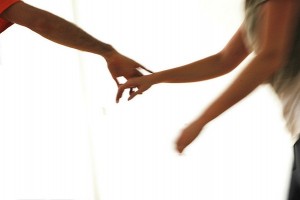 8. Make eye contact and don’t be shy, especially if there is to be contact improvisation or you are improvising in a group.
9. Be “available”. This is related to the above but contact improvisation in particular involves recognizing and being open to opportunity for connection when it crosses your path.
10. Don’t compare yourself to others. This doesn’t mean ignore the other dancers – as you can see from above that’s the last thing you want to do. This tip relates to not judging your own movement and extends into avoiding judging the movement of those around you. Improvisation works best when people are safe and free to explore so adopt a positive and accepting attitude.
I’m sure improvisors have more great tips to share….
What would you add to the list?
Still have questions or concerns? What do you want to know about improvisation?


Nichelle Suzanne is a writer specializing in dance and online content. She is also a dance instructor with over 20 years experience teaching in dance studios, community programs, and colleges. She began Dance Advantage in 2008, equipped with a passion for movement education and an intuitive sense that a blog could bring dancers together. As a Houston-based dance writer, Nichelle covers dance performance for Dance Source Houston, Arts+Culture Texas, and other publications. She is a leader in social media within the dance community and has presented on blogging for dance organizations, including Dance/USA. Nichelle provides web consulting and writing services for dancers, dance schools and studios, and those beyond the dance world. Read Nichelle’s posts.